
Death rituals are among the oldest and most revealing human practices: they encode beliefs about the afterlife, social status, identity, and the obligations of the living to the dead. This longform article gathers scholarly and journalistic sources to explain major funeral customs around the world, the beliefs behind them, shared cultural logics, and the contemporary forces reshaping how societies say farewell. Encyclopedia Britannica+1
Why funeral customs differ — core forces at work
Funeral customs are shaped by religion and cosmology (what people believe happens after death), by history and social structure (caste, class, kinship), by environment (available land, climate, scavenger species), and by legal and economic factors (national laws, costs). Patterns of religious identity worldwide make certain dispositions (e.g., burial vs. cremation) more common in some regions than others. Pew Research Center+1
Major traditions and what they signify
Hindu rites: cremation, rites for ancestors, and sacred rivers
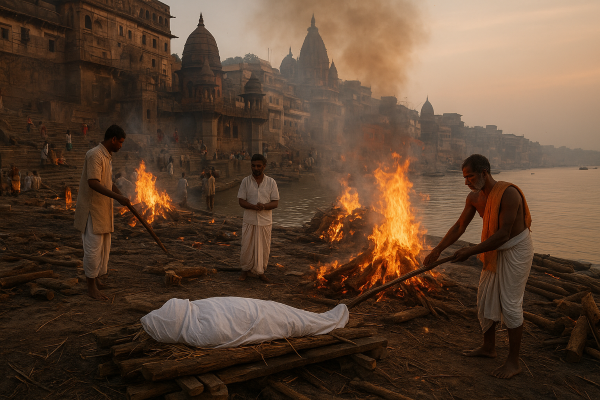
In many Hindu communities, cremation is the central rite: the body is ritually burned to release the soul (ātman) from the body as part of samsara (the cycle of rebirth). Post-cremation rites — such as offering the ashes into a sacred river like the Ganges, and later memorial ceremonies (śrāddha) — are intended to secure the deceased’s transition and benefit ancestors. These practices vary with region, caste, and sect but are a durable feature of Hindu funerary culture. Encyclopedia Britannica+2Encyclopedia Britannica+2
Buddhist practices and sky burials (Tibet)
Buddhist funerary practices emphasize impermanence and the moral consequences of a life (karma). Rituals often include chanting, merit-making, and ceremonies led by monastics to support a peaceful transition. In Tibetan regions, “sky burial” (exposure of the body to vultures) is practiced in some communities as an act of generosity (giving the body to other beings) and as a practical response to the high-altitude environment. Sky burial’s meaning is tightly linked to Tibetan Buddhist cosmology and the idea of transforming the body into beneficial form. Tibet Travel and Tours – Tibet Vista+2Wikipedia+2
Chinese ancestor veneration and tomb-sweeping (Qingming)
In Chinese cultural spheres, rituals of ancestor veneration — maintaining graves, offering food, and performing memorial rites — are central. The Qingming (Tomb Sweeping) Festival is an annual moment when families clean graves, make offerings, and reaffirm obligations to ancestors, reflecting a worldview where the living and dead remain part of a continuing social chain. Encyclopedia Britannica
Día de los Muertos (Mexico): remembering as celebration
Día de los Muertos blends Indigenous and Catholic customs into a festival of remembrance in which families build altars (ofrendas), decorate graves, and celebrate with food, music, and imagery of the dead. Rather than a negation of grief, the holiday affirms ongoing relationships between the living and deceased and is recognized internationally as an important cultural practice. UNESCO ICH+1
Ghana’s funerary culture and “fantasy coffins”
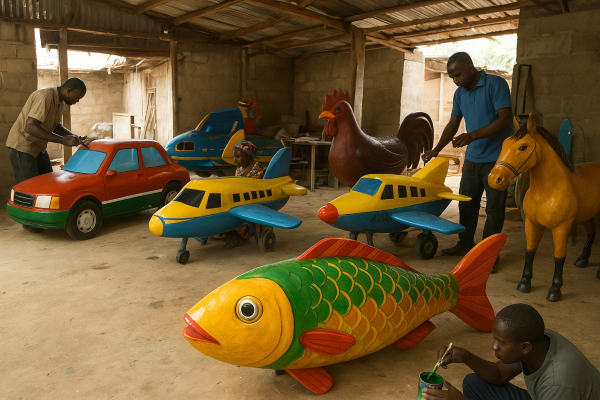
In parts of Ghana (notably among the Ga), funerals are elaborate social events with music, dancing, and processions. A striking modern feature is the “fantasy coffin” or custom-shaped coffin (e.g., fish, airplane, car) designed to represent the deceased’s life, profession, or aspirations — a vivid expression of identity and social display. Journalistic and ethnographic accounts document both local meaning and global interest in these coffins as art objects. AP News
Zoroastrian excarnation — the Tower of Silence (dakhma)
Traditional Zoroastrian practice in some communities uses a dakhma or “Tower of Silence,” where the dead are exposed to scavenging birds. The rite reflects the religion’s emphasis on avoiding contamination of earth and fire by corpses. Contemporary environmental changes (notably vulture declines) have disrupted this practice in places and prompted debates about preservation and adaptation. Encyclopedia Britannica+1
Jewish and Islamic customs: purification, shrouding, and prompt burial
Both Jewish and Islamic traditions stress ritual purification and relatively prompt burial. In Judaism, the taharah (ritual washing) performed by the chevra kadisha and burial in a simple shroud are central; tradition generally favors burial as soon as is practical. In Islam, the ghusl (ritual washing), kafan (shrouding), the Janāzah prayer, and burial (typically within 24 hours where possible) reflect beliefs about bodily dignity and the urgency of returning the body to the earth. These customs vary regionally but share an ethical emphasis on respect and humility in disposition. Gardens of Peace+3My Jewish Learning+3CPJ Field+3
Western Christian funerals and contemporary pluralism
Traditional Christian funerals (Mass or service, prayers for the dead, burial or cremation) emphasize resurrection and eternal life in different theological registers (Catholic, Orthodox, Protestant). Over recent decades, secularization and cost/environmental concerns have driven rising cremation rates in many Western countries — a trend that interacts with liturgical norms and legal frameworks. Encyclopedia Britannica+1
Themes and meanings across cultures
Despite diversity, most funerary systems share several aims:
- Transformation or transition: rites help move the deceased from one ontological state to another (resurrection, rebirth, spirit world). Encyclopedia Britannica
- Purification and containment: many rituals cleanse the body or contain potential sources of spiritual or physical impurity (washing, shrouding, exclusion of contamination). My Jewish Learning+1
- Commemoration and social memory: ceremonies reproduce social bonds and transmit identity (altars, tomb upkeep, storytelling). Encyclopedia Britannica
- Material and ecological negotiation: choices about burial method are shaped by land availability, environmental ethics, and local ecology (e.g., sky burial and dakhma require scavengers; cremation requires fuel and emits gases). Tibet Travel and Tours – Tibet Vista+1
Contemporary trends reshaping how we bury and remember
Cremation’s global rise (cost, space, secularization)
Cremation rates have risen markedly in many parts of the world (Japan and Taiwan approach near-universal cremation; rates in Europe and North America have increased sharply). Drivers include urban land scarcity, lower costs, changing religious attitudes, and legal shifts. Professional associations and national statistics document steady increases and regional variation. Wikipedia+2cremationassociation.org+2
Green burials, human composting, and new eco-technologies
Environmental concern is driving new burial options: certified natural/“green” burials, biodegradable coffins (including novel mycelium/mushroom coffins), reef memorials made with cremains, and legal experiments with human composting (natural organic reduction). The Green Burial Council, academic research, and recent journalism show a rapid expansion of services and technology — along with regulatory and ethical debates (e.g., standards, “greenwashing,” and public health oversight). The Verge+3GREEN BURIAL COUNCIL+3GREEN BURIAL COUNCIL+3
Cultural change and preservation pressures
Some traditional rites face existential pressures: ecological change (decline of vulture populations affecting dakhma practices), urbanization, and legal constraints can force communities to adapt or abandon older rites. At the same time, global interest in cultural heritage (museums, festivals, tourism) can both preserve and transform practices (as with Ghana’s fantasy coffins). The Guardian
Practical etiquette: attending funerals across cultures (concise guidance)
- Ask first. Customs vary; check with hosts or a local guide about dress, behavior, and photography.
- Respect timing and ritual roles. In Jewish and Muslim funerals, for example, ritual washing and shrouding are often handled by a same-sex group and certain moments are private. My Jewish Learning+1
- Avoid assumptions about emotion. Some cultures express grief loudly and publicly; others prefer reserved mourning. Both are valid. Encyclopedia Britannica
Sources & suggested further reading
(Selected primary and authoritative sources used in this article — click for detailed accounts.)
- Britannica — Antyesti (Hindu funeral rites) and Cremation entries. Encyclopedia Britannica+1
- UNESCO — Indigenous festivity dedicated to the dead (Día de los Muertos). UNESCO ICH
- AP / National Geographic — reporting on Ghana’s fantasy coffins (contemporary cultural context). AP News
- Britannica — Dakhma (Tower of Silence) / Guardian reporting on threats to the practice (vulture decline). Encyclopedia Britannica+1
- MyJewishLearning and chevra kadisha resources on taharah. My Jewish Learning+1
- Encyclopedic and community resources on Islamic funerals and Janāzah (bathed, shrouded, buried ideally within 24 hours). Wikipedia+1
- Pew Research Center — global religious landscape (context for why particular rites dominate certain regions). Pew Research Center
- Cremation Association of North America & NFDA — cremation statistics and trends. cremationassociation.org+1
- Green Burial Council, Natural Death Centre, and scientific literature on green/natural burials. GREEN BURIAL COUNCIL+2Natural Death Centre+2